
Reinforced Autoclaved Aerated Concrete (RAAC) Surveys
Here to provide you with advice on reinforced autoclave aerated concrete, also known as RAAC.
Overview
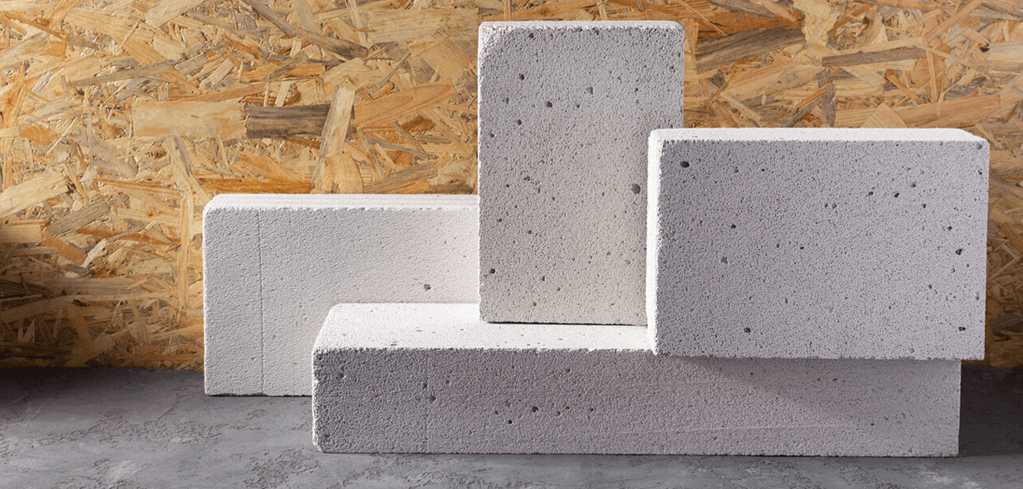
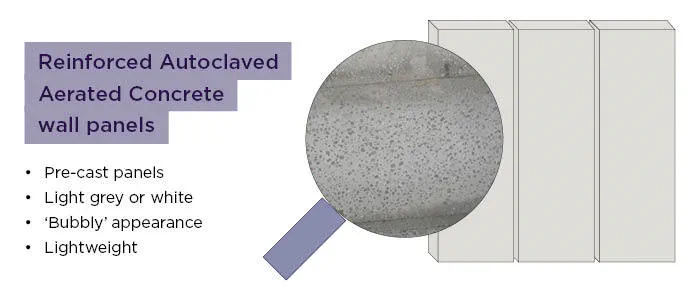
Reinforced Autoclaved Aerated Concrete (RAAC), was an innovative construction material developed in the 1920s and used after the Second World War, primarily in public buildings such as schools, colleges, hospitals, as pre-cast panels for flat roofs, between the 1950s and the 1990s. It can be defined as type of lightweight, bubbly concrete made from cement, lime, water and an aeration agent.
With structural behaviours significantly different from traditional reinforced concrete, it was commonly used because lighter and cheaper.
What is RAAC
What are the issues of RAAC?
Issues with its durability came to light in the 1980s due to crumbling buildings – RAAC is now estimated to have a lifespan of about 30 years – and the use of this type of concrete ceased. Further interest to the subject rose due to the collapsing of a school roof in 2018.
Although there have been closures of schools and hospitals, there is no deadline for assessing public sector estates for reinforced autoclaved aerated concrete, however it’s not unfeasible that one could be introduced in the near future. It is paramount to mitigate the risk of failure and the potential damage that the presence of RAAC would cause.
Some of the main risks with reinforced autoclaved aerated concrete is that its presence in pitched roofs, walls and floors is not always clear, and it doesn’t show evident signs of failure before collapsing.
Jack Colgate
Senior Surveyor, Building Consultancy

Services
Carter Jonas has several highly experienced building surveyors, located across the country, with a range of specialist skills. Our approach to the presence of RAAC in your building is dependent on several factors and tailored to the estate and your needs.
The presence of reinforced autoclaved aerated concrete might not require complete roof replacing, nor remedial works, as in many instances, if the condition is acceptable, monitoring or maintenance will suffice. If the covering that surrounds the concrete has no signs of deterioration, there is limited water ingress and periodical removal of loads on flat roofs (such as chipping or vegetation), RAAC panels will not need replacing.
Why Choose Carter Jonas?
Our national building consultancy team is located across the core Carter Jonas offices in Birmingham, Bristol, Cambridge, Oxford, Leeds and London and comprises a number of highly qualified and experienced chartered building surveyors. We are able to provide a professional, effective and personal service, no matter what your needs are, to ensure your building remains structurally safe.
As chartered building surveyors we understand the difficulties of managing any estate, and can appreciate and comment upon all aspects surrounding RAAC including:
Surveying your building to identify the presence of RAAC across the property
Assist in reporting to the Department for Education, filling out the DfE RAAC Survey
Monitoring and maintenance of RAAC panels,
Remediation strategies for remedial work and/or complete replacement
Meet the Team
- Loading...
- Loading...
Related Case Studies
 Read case studyApril 2025
Brick By Brick primary care development
Our experts were appointed by Brick by Brick, a private development company established by Croydon Council.
Tags:- London
- Commercial
- Healthcare
 Read case studyAugust 2024
Wincanton Gateway
Wincanton is situated just off the busy A303, 39 miles east of Taunton and 34 miles west of Salisbury.
Tags:- South West
- Commercial
- Retail & Leisure
 Read case studyJuly 2024
John Radcliffe Hospital New Modular Theatre Building
Carter Jonas was instructed in late 2022 to prepare a full planning application for the erection of a new, 6-storey modular theatre building at The John Radcliffe Hospital, Oxford.
Tags:- South East
- Commercial
- Healthcare
Est. 1855
Leading the property industry for over 160 years
700+
Property experts working across the UK
9,500+
Active registered buyers and tenants on our database
99.6%
of asking prices achieved
Research and Insights
 Read insight
Central London Net Effective Rents Monitor Q1 2026
Our Q1 2026 Central London Net Effective Rents Monitor illustrates the combined impact of changes to both prime headline rents and the typical length of rent free periods across 22 central London districts.
 Read insight
Investment Quarterly Q1 2026
Our research specialists, working with our national and regional investment professionals, have released the latest Carter Jonas UK Investment Quarterly report for Q1 2026.
 Read insight
Building Consultancy Insights
Insights and thoughts from our building consultancy and project management experts on the latest trends in the field.
Need more tailored advice? Get in touch with your local office.
Our team will contact you directly to discuss your property needs.